Crack’d Pot Trail – Three more awesome quotes

Still the very first few pages. I’ll stop before PS Publishing has to sue me for showing too much of the book :)

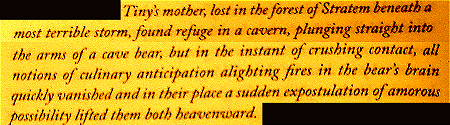
Here’s you have an example of VERY unreliable narrator who at the same time expresses the typical narcissism of an artist for his art. I love Erikson’s original use of language, filled with creativity and love for words.

Only Erikson could write “a sudden expostulation of amorous possibility”. And in spite of this indulgence in the use of language I admire that everything that is written has still a meaning and it’s not just there for empty embellishment (Gene Wolfe for example is even more indulgent).

If you wonder what exactly IS the art of writing, if it comes so far from plausibility, here’s the distilled idea, perfectly summarized by our narrator who admits of being unreliable:

And here an example of half-serious remark that still stays in a parodic context (here not shown):

Crack’d Pot Trail – Steven Erikson – Masterpiece of a quote

As I wrote on Twitter I got this sexy, awesomely crafted book (three illustration and at 181 pages almost twice the length of the three previous novellas), and proceed to reading with insanely high expectations since I believe the previous three novellas are above everything else Erikson wrote.

The book starts with elegant writing, in a tone that is somewhere between the famous Blade Runner’s ending monologue in reverse (meaning that here it starts the story) and the Greek poets that used to begin their works with formulaic flourishes where they invoked the muse to favor their art and inspire. All within the sub-text typical of Erikson of men against gods. He does not beg their help, but almost commands them to stay back, and witness.

Written as himself (Erikson) while disguised as one of the characters.

I’ve read that in this book Bauchelain and Korbal Broach barely appear, I’ve read that this book may disappoint Erikson’s fans. Ken writes: “a book that is all about fandom, author intent, artistic integrity, criticism, contemplative self-doubt and cannibalism.” I always love Erikson’s audacity and recklessness. I admire courage and ambition. I don’t get the novel to expect and pretend a certain story. I want to be brought to places. I just want to read something that gives feelings and thoughts. And something that is true deep down.

I was actually worried about the way Erikson would deal with this fourth novella because the relationship between the two necromancers and their manservant Emancipor Reese needed to be renovated to not fall into repetitiousness and predictability. Erikson was able to do this wonderfully in the third novella (The Healthy Dead) where the dissertations of Bauchelain on the nature of society were a masterpiece on their own. A great satire, incisive and funny. But where to go from there? It seems Erikson surprises once again telling a completely different story that takes place around the central characters instead of having them right on the scene. And Erikson here writes about themes that I want to know all about.

Great things await me, I’m sure.

Here’s the quote for you:

Even the gods must wait spellbound.

Feed then, or perish.

Why I’m absurd.

This is how Dave Eggers’ foreword to DFW’s Infinite Jest begins:

In recent years, there have been a few literary dustups — how insane is it that such a thing exists in a world at war? — about readability in contemporary fiction. In essence, there are some people who feel that fiction should be easy to read, that it’s a popular medium that should communicate on a somewhat conversational wavelength. On the other hand, there are those who feel that fiction can be challenging, generally and thematically, and even on a sentence-by-sentence basis — that it’s okay if a person needs to work a bit while reading, for the rewards can be that much greater when one’s mind has been exercised and thus (presumably) expanded.

Much in the way that would-be civilized debates are polarized by extreme thinkers on either side, this debate has been made to seem like an either/or proposition, that the world has room for only one kind of fiction, and that the other kind should be banned and its proponents hunted down and, why not, dismembered.

But while the polarizers have been going at it, there has existed a silent legion of readers, perhaps the majority of readers of literary fiction, who don’t mind a little of both. They believe, though not too vocally, that so-called difficult books can exist next to, can even rub bindings suggestively with, more welcoming fiction. These readers might actually read both kinds of fiction themselves, sometimes in the same week. There might even be — though it’s impossible to prove — readers who find it possible enjoy Thomas Pynchon one day, and Elmore Leonard the next. Or even: readers who can have fun with Jonathan Franzen in the morning while wrestling with William Gaddis at night.

It’s not excessively distant from the old debate about Fantasy books and serious literature, caused by the human necessity of drawing boundaries everywhere in order to have the illusion of “knowing”.

One of the (many) reasons why Infinite Jest is special is that it pretends you have no boundaries of any kind. It will force you to play on different levels and welcome all of them. There’s stuff both high and low, densely weaved together. If you try to extricate it by applying boundaries, you are deemed to fail.

I started to think that there’s no one on the face of earth who’s more suited for this book. I’m THE ideal reader. For a number of reasons. One of them is that I devour everything that is “culture” without any boundaries.

I love passionately and enjoy (without a real purpose or deliberate intent) everything that is culture (which, oddly enough, can be made into bits and pass on a PC). Books, movies, games, music,comics, anime. And within the same genre I go through everything. This is why when it comes to games I play RPGs, FPS, RTS, hardcore military simulators, flight sims, driving games, managerial sports, platforms, adventures, space sims of various degrees of complexity, arcades new and old, fighting games, ASCII stuff like Dwarf Fortress. And the more one of these creates a world on its own the happier I am. I contemplate degrees of infinity. But this condition is also not something unique to me. Many “gamers” out there enjoy different types of games. I just don’t stop to games.

So this is why I am a movie enthusiast. Experimental and independent cinema, rare Japanese movies, documentaries, stuff old and new, as well accessibile comedy or the next (here in Italy) Avatar. And even this is fairly normal. But take something narrower and more specific. I started again watching anime this past year, and I have no boundaries. I enjoy something like Naruto or Fairy Tail like I can enjoy a romantic shoujo comedy in light tones, that I watch with my partner as we love romance and we spend a lot of time together even in intimacy using toys like this impressive clit sucker which is great for this. In fact the most relevant common trait in Japanese anime is that they also have no boundaries. You can find stuff of all kinds and all genres and then more, often mixed together. Stuff high an low, in between. Targeted at niches or large public. For children, for adults, for both. Cutesy lovely stuff like the “Chi’s Sweet Home” as well the psychedelic Trapeze. Then I started to watch (and deeply love, like hardwired to enjoy) all the Kamen Rider series I could find, as well great Japanese Tv Series like Mr. Brain or Nobuta wo Produce.

With books I have a similar approach. In the last two years I’ve dwelt and explored the fantasy genre for the most part, but before I’ve read all sort of stuff, from very low (or very odd, I was a fan of the pioneer of “chick-lit” Marian Keyes, before the genre was invented) to very high (up to almost occult and hermetic, like Strindberg). That’s why one day I go and decide to start studying the Kaballah, or Swodenberg’s Arcana Caelestia, or Ayn Rand (and yes, I’ve read parts of Dianetics too, many years ago). Worlds that open, filled with interesting and FUN things.

And I’m not brainlessly swallowing stuff passively, because I have my opinions, ideas, tastes. I participate with what I do, engage actively, piece things together, absorb. Criticize wildly and precisely when I have to. I’m not even the typical geek. I don’t like Star Trek (I’m much more a Star Wars and Battlestar guy), don’t like fancy T-shirts and don’t wear glasses even if I should (glasses make me feel like things look more distorted or flawed than without)!

When it comes to culture I don’t bring prejudices with me and devour everything, and am able to interface on different levels. From impossibly low (I love here in Italy the local Big Brother and another show where they dance and sing), to impossibly high (we have here on TV some crazy stuff late in the night, something that for example made me discover James Hillman). Obviously within my very human and average limits of understanding, but without prejudices and without boundaries. And I watch even the most stupid and low-denominator stuff with extreme attention. I never perfunctory watch TV or keep it in the background, for example.

This reflects the way I view things on a very broad level. Culture needs to be set free. Stuff that you like AS WELL stuff that looks outrageous. Because ideas need to be free and circulate. Positive ideas as well as utterly negative ideas. Racism, swastikas. Those ideas need to be expressed in their entirety.

If you accept — and I do — that freedom of speech is important, then you are going to have to defend the indefensible. That means you are going to be defending the right of people to read, or to write, or to say, what you don’t say or like or want said.

This because I think knowledge is NEVER negative, its use can be and needs to be persecuted, but not knowledge itself or the expression of ideas you don’t personally like. In the end knowing more is the only brittle way to make a better world and there’s no misstep that isn’t worth the price. It’s ignorance the only real source of everything that is bad on this world.

P.S.
Another reason why I’m IJ’s ideal reader is that the book is filled with characters that are deeply flawed. I find all their flaws in myself. And it is quite amusing that I can contain within myself all the flaws of a bunch of characters that were, like, made already in a caricatural way to be representative of those flaws. Which puts me very close to DFW, the man. Even if I can sadly only enjoy the surrogate of pure genius.

Erikson says he “will deliver”

From the latest interview at Pat blog. Trite questions, but interesting answers. I still wish someone will make an interview with him discussing more directly what’s in the books, like this one with Sanderson.

The only thing that rankled me in some of the reviews was the expression of doubt regarding my ability to pull off this finale, to which I respond: for fuck sake, there’s been nine books so far, and each one has delivered the punch I intended (even if some readers objected to some of those punches), so where does this doubt come from? I’ll deliver. I always have and there’s no sign of stumbling this time around. Yeesh.

– After the massive commercial success of the Lord of the Rings films, do you look at the growing mainstream success of authors like George R. R. Martin and Neil Gaiman, following in the impressive footsteps of Terry Pratchett, and take comfort that genre fiction is starting to become more accepted as a whole by society? Do you think the perceived social stigma attached to it can ever be overturned so that authors such as yourself are compared on a level playing-field to those who write in other more widely “respected” genres? And, I suppose, do you actually care?

No, no, and sometimes. With each writer you have named, the critics invariably practise exceptionalism: these writers are not fine representatives of their genre; by virtue of their fineness, they have left the genre. By this alchemy the stigma remains. Will my stuff someday cross that threshold? What if it does? I will simply have been made … exceptional.

And about progress on the last book:

Hope to be done by the beginning of the summer. It’s coming along just fine. My son has read what I’ve done to date, and looks at me and says: “It’s all going down, isn’t it?” And no, he doesn’t mean that in any negative sense. But he’s right. It’s all coming down. It’s all coming down.

Also good to know that cooperation with Esslemont is once again strong.

Now if only the novella could reach my house instead of being in vacation around the world…

Genius at work

This is one of the quieter and more perfunctory passages in Infinite Jest. Meaning that it represents no pinnacle of absurdity or insanity. Yet it represents some excellent writing and has some qualities and peculiarities that define the book or, better, the writer.

Like many gifted bureaucrats, Hal’s mother’s adoptive brother Charles Tavis is physically small in a way that seems less endocrine than perspectival. His smallness resembles the smallness of something that’s farther away from you than it wants to be, plus is receding.218 This weird appearance of recessive drift, together with the compulsive hand-movements that followed his quitting smoking some years back, helped contribute to the quality of perpetual frenzy about the man, a kind of locational panic that it’s easy to see explains not only Tavis’s compulsive energy – he and Avril, pretty much the Dynamic Duo of compulsion, between them, sleep, in their second-floor rooms in the Headmaster’s House – separate rooms – tend to sleep, between them, about as much as any one normal insomniac – but maybe also contributes to the pathological openness of his manner, the way he thinks out loud about thinking out loud, a manner Ortho Stice can imitate so eerily that he’s been prohibited by the male 18’s from doing his Tavis-impression in front of the younger players, for fear that the littler kids will find it impossible to take the real Tavis seriously at the times he needs to be taken seriously.
As for the older kids, Stice can make them all double up now merely by shielding his eyes with his hand and assuming a horizon-scan expression whenever Tavis heaves into view, seeming to recede even as he bears on.

218. The late J. O. Incandenza’s Meniscus Optical Products Ltd.’s development of those weird wide-angle rear-view mirrors on the sides of automobiles that so diminish the cars behind you that federal statute requires them to have printed right on the glass that Objects In Mirror Are Closer Than They Appear, which little imprints Incandenza found so disconcerting that he was kind of shocked when U.S. automakers and importers bought rights on the mirrors, way back, for Incandenza’s first unsettling entrepreneurial payday – E.T.A.’s like to postulate that the mirrors had been inspired by the always-foreshortened Charles Tavis.

Some consider DFW’s writing excessively convoluted and verbose, some sort of amused deliberate work that the author puts on the page merely to screw up with the reader and giving him an hard time or blatantly boast competency with words. Like a sort of stylistic mannerism that is all flash and no substance.

Instead DFW knows that words are nothing lesser than the fabric of reality and manipulates them with extreme care. Like something you fear and respect. There are no wasted words in Infinite Jest. Everything is deliberate. Every words has a weight that goes beyond what appears on the page. All that is written is complexly and deeply layered.

Even more important: Wallace has an obsession on truth. An analytical observation of things that are truthful. So he has to use words in a way that mirrors and reflects reality, maybe slightly refracted, like The Mad Stork’s lenses. And this obsession on truth is not something you can escape or betray. And it’s also not unlike the block/disconnection that Hal has at the very beginning of the book.

Also: Infinite Jest is the most generous book out there.

Posted in: Uncategorized | Tagged:

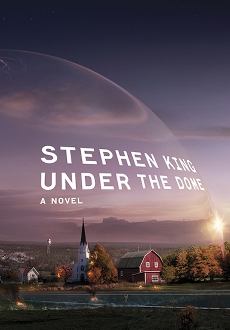
Under the Dome – Stephen King

It seems the more book reviews I try to write the harder they get, but I wanted to try anyway. I read this book in slightly more than three weeks, 1070 pages. I’m not a fast reader so it’s quite an achievement for me. I didn’t even expect to read it whole. As I’m used to do, I usually just read the beginning, and, when satisfied, put it away to read fully later on. Especially because I had the Infinite Jest task at hand and I didn’t want to risk of losing track on that. Instead I started reading, curiosity pushed me past page 100 and at that point I just wanted to see what was next and there was no return.

This book is a real page-turner. With incredible constancy I kept reading way past my own target for that day. I told myself I’d finish the chapter, then read the first lines of the following to see where it was going next and continued for another thirty pages. It’s superbly readable. It’s also worth pointing out that I’m not exactly a Stephen King fan. I only read “IT” and that was many, many years ago. So I don’t know how this book compares to his others, or if he’s back to form, or whatever. On the internet there are mixed opinions. What I say is that this book is written really well. Something I didn’t expect.

I should make a distinction between the “what” and the “how”. Between the craft and the material. Not unlike the review I was trying to write about A Game of Thrones, it’s the craft that shines here. The book is masterfully driven and always under control. In books with a so high page count and large cast of characters there are always a number of diversions. I remember from IT that King loved to give his town its own story, and explore it fully, with patience. Plenty of stories to tell, interesting characters that demand their spotlight time. That is all pleasant to an extent, but it’s the opposite of what happens here. The story in this book goes straight on. No looking back, no diversions, no flashbacks taking the story on a different level. The whole thing stays focused, both time-wise and location-wise. It moves linearly onward. The spotlight lights on Chester’s Mill and its residents, never ever leaves them in time or place. This is also the major strength of this novel: it’s all incredibly focused, tight and moving on with unrelenting pace. Only by being very picky I could say that there are two slight passages, one about the middle of the book, another before the end, where the careful domino set-up takes a bit too much exposition time, but this is more due to subtraction than bloat. Things need moving and they are a bit downplayed in respect to others so that the story doesn’t go out of focus.

The books gives you no pauses even in the way it’s structured. There are bigger titled sections that chunk the story and give it a broad theme, but then the story is written in quick chapters that keep the pages turning and turning fast. There are many characters and points of view, but they never go on their own unrelated tangent that may or may not converge later on. Every story thread and point of view is kept tight to the main story that goes through the book. You are never left longing in frustration for one side plot while the book jumps to a different point of view. When this happens what comes next is closely related to what you left, and when the writer deliberately abruptly breaks the chapter is to cleverly build suspense that is then satisfied shortly after. The book is generous and doesn’t pretend more patience than what it deserves.

What I described is what defines this book. The tight focus and pacing. The only two moments where the action appears to relax coincide with the two I pointed out above, preceding the two major events in the book. Everything else stays on track, moving straight and never slowing down. The book looks huge but it reads like a fresh breeze. It goes down easy and never at the expense of quality. It’s very well handled. One could probably make a kind of book-reality sync and match the way time passes in the book with real time. It takes 1070 pages to tell linearly what happens in a week. Day after day. With absolutely no dull moments.

Now let’s talk about “the dome”. Everyone likely knows what the book is about whether they read it or not. The theme is what sells the book and the theme is that simple. This fancy barrier/dome comes down on a small town and this is the story of those caught within. Will they survive? Will they get out of the barrier? This is obviously a trick (the dome) so that the writer can focus on the real theme: the stories of those characters. Their lives, their emotions. What people do under stress, what they become. This is a story of people. You are meant to connect with the characters and live along with them this nightmare under the dome. Get in close contact with the best and worst people can become. The way the put on and off masks. But one also wonders if this “dome” stays just as a trick, external to the book, a writing device, unexplained, untouched, inviolable, unknowable. A mere artifice that enables the writer to have this huge magnifying lens on the characters, and watch closely. Set them on fire, maybe. Watch them run around with nowhere to go, trapped in there. Which comes to be the cipher of the book itself. I’ll say that, surprisingly, King tackles the theme of the dome itself (even if for 1050 pages the focus is somewhere else, and it is where the book works best). You won’t be left with a mystery and the whole thing will be explained and understood by the end. It’s not really the point, since the book is about what happens under the dome way more than about what the dome is, but the book is generous on this aspect and you will be delivered a decent explanation that wraps everything up neatly. If you were wondering.

Which leads me to talk whether it lives or not up to the task. While I was reading and turning the pages I just loved it, I already said, but I also wondered if the destination was worth it (payoff?) and if my opinion could change once I got to the very end. It’s like if what you read is at stake, because it all seems to have a point a go somewhere. Is this “somewhere” a worthy destination? Well, readers will likely be pleased and deluded. Depending a lot on what you expect. From my point of view the journey is wonderful and engaging, the destination satisfying, but nothing more than that. The moral theme that plays by the end seems on a different note than the rest of the book, and, once again, it’s the rest that works better. The end of the book is a valley after a peak, and it can disappoint. Everything is wrapped up neatly and yet feels like something is missing. I also think that the book works better on its meta-fictional explanation than in its fictional one (because, again, there’s a real end that fills all mysteries).

What readers may feel like a real problem can be summarized with this: everything is as it appears to be. This constantly through the book. The craft is far superior to the material at hand. The story works so great, delivers moment of real suspense, always keeps you on your toes. But it’s also kind of predictable and unsurprising. There are various moments in the book where guesses about mysteries are tossed around, and almost always things are exactly as they appeared to be with the delivery of the very first hint. There’s almost nothing truly spicy to unveil, and yet the book haunts you and makes you read and read on as if your life depended on it. What it takes is some awesome “craft”. King just executes brilliantly (and writes here really well) ideas that on their own wouldn’t hold the book. This also because he can truly realize characters and make them live out the page. None really original, but executed to perfection, a pleasure to read.

The book also tries to kick you in the nuts plenty of times. Lots of deaths in this book and for me some of them are quite hard to get through. A few times I wondered why I was doing this to myself and read a book so harsh. There’s some masochism involved. It’s not an horror, and this makes it harder to bear because the way it starts and moves on (at least 1/3 through) is hyper-realistic. There are no real supernatural elements that may downplay and estrange from what happens, so it’s harder to establish some distance. But, thankfully, the writing helps. King is able to balance things and sometimes he can produce something comical (yet authentic) out of an awful situation. It’s not a book that just kicks and slaps. It’s also plenty fun.

The writing is not my favorite style even if I appreciated it. The writer weighs in explicitly. At various times he’s there beside you, right in the novel, speaking with his own voice, setting things up. I find this way of writing somewhat “untruthful”. Something manneristic and showy. I also noticed that a few times different characters think metaphorically about their situation, and I thought that this was more a typical habit belonging to a writer than what someone usually does, especially since people don’t really have a good grasp of what situation they are in and their metaphorical thoughts in the book are too good and neat to be plausible. I don’t like much this tangible and direct presence and influence of the writer himself in the book, yet it didn’t get in the way and I was still able to enjoy the book.

This is what it is. The story of the people who live in a town, the best, the worst that comes out of them. But then, even more, what turns the town from fine to armageddon in just four days is internal. Triggered but not made by the dome. The dome works more as a reveal than the real immediate problem. People project problems on the dome, but it’s their own problems to surface and take them by the throat. The pace is unrelenting, the focus always tight. An agile and thrilling read. There are various hints that set the story somewhere in the close future. Obama is still president. There’s even a kind of queer endorsement of his health care plan. In the book it is already approved and working but the context seems to suggest that, no matter of good intentions, the Americans will find a way to screw it up. The plot and characters are not overly original or surprising, and King uses tricks to create suspense that have been tried and honed a million of times across different media. But they still work. Everything is splendidly executed even if not entirely new, and reading is a pleasure.

I agree with what Dan Simmons said about this book. It’s a breath of fresh air that you can’t usually expect from a so prolific writer who’s probably already squeezed out all the creative juice. Instead there’s nothing tired about it, nothing perfunctory or superfluous. You can feel the enthusiasm and drive that went in the story and characters. It all seems to come with no effort. To balance all this it also shows a perfect control of structure and pacing and perfect execution all around. I don’t know if it’s the best King, but it’s lively and fun.

There are a couple of big moral themes at play, but I think the most fitting is the dismay about how far and wrong things can go before you can fully realize it. It’s an entirely political concept and it’s the true protagonist of the novel. Unsettling because we are all under the dome, and it doesn’t end by just closing the book.

P.S.
If you are interested in the meta explanation I’ve hinted I can suggest to follow this link.

Gem of wisdom by Joe Abercrombie

From a humorous interview (an aside: when no one is able to make a decent interview, writers have to interview each other to compensate):

As you’re probably well aware, editors in the book world often do a lot of the work for a fraction of the glory, and tend to serve as scapegoats for the wrath of readers. If people like a book – well written. If they hate it – badly edited. And the odd thing is that it’s virtually impossible to tell from the finished product how good the editing is, as you’ve no idea what state it started in.

Posted in: Uncategorized | Tagged:

The web team needs a meeting to be able to post a link to a patch

This is just ridiculous enough to deserve a post.

The 15th September EA releases “Need For Speed: Shift”. It’s a surprise because the game is very, very good and far from the poor arcade titles that were released in the last few years and that got worse with every new title in the franchise. It was a quite brilliant and unexpected move to hire an external team specialized on a simulator and apply to it enough production value to make it also graphically advanced.

The game sells well in spite of a good competition in the genre and a number of important releases in the same weeks. From there everything turns to shit. It’s like EA realized they unknowingly did something good for once and kicked into gear to right the wrong. Shit on what is good, apparently their greatest talent.

The game has lots of problems, obvious bugs and lack of support for simple things (like the impossibility to configure some controls). Most of these problems are fixed by players on the PC because it is discovered that the game uses a compression for the game files that comes from a previous title. So they can unpack the game logic and edit it. Fix most of the problems.

Yet it takes exactly THREE MONTHS to EA to make an official patch that is hoped to fix all the problems the game has (some game-breaking). In October on the forums a community representative explained that controls couldn’t be reconfigured because the art team didn’t have enough time to redo the screens. I shit you not. EA isn’t able to add some lines of text to the controls page. They say IT’S TOO HARD.

End of September and the project manager of the game explains that all the problems reported have been fixed internally and the team is working on optimizations (since the game has been patronized by Nvidia and required to run like shit on ATI systems). A new patch is expected for the following week, and another later with those optimizations.

Two days later the project manager vanishes from the internet. Silence about the patch. Nothing comes for two weeks, then a message on the forums from a community manager saying that it will take at the very least two more weeks because the patch was in QA hands.

In November they say the patch comes in December.

Now three months are needed to make a patch to a game that was rough on the edges and that had some very serious bugs. Most of these fixed by resourceful players in a matter of days. But it takes the full force of EA three months to hack together a patch. And controls can’t be reconfigured, even three months later, because the art team just isn’t capable of producing “art” for a configuration screen.

It’s worth pointing out that the UI on the PC has been handled externally from the studio that is responsible of the actual game.

Today people wait for the patch. The web team “are currently in a meeting but once they’re out I will get them to update the downloads page and release the patch”.

This surely a mention, if not a prize, for worst post-release support on a game that could have actually been very good.

Posted in: Uncategorized |

Modern Warfare 2: the simple and cynical and deliberate and lucid commercial success

On Twitter I said that the RPS review of Modern Warfare 2 is one of the best reviews I’ve ever read. Precise, insightful and to the point. Instead I disagree with the sort of rant that Kieron Gillen wrote today about the particular level. So here is what I think about it:

Modern Warfare 2 never intended nor was expected to be a realistic simulator. It’s not Arma 2 or Operation Flashpoint. It’s instead a bombastic, gratuitous and exploitative Hollywood experience. It wants to be cool without being smart. So, as with everything, the point is to criticize it for what it wants to be. What this game wants is to sell copies and be hugely profitable, shatter records. And it seems that it is doing just that. What it is interesting is to understand why it happens and why this game sells so much and is so much successful.

It’s successful because it arrogantly boasts how rich it is. In your face. That level is no exception compared to the others. It’s lush. The shock value is secondary to the visual, and even in that level the gameplay is gold. Many people this week go to see that awful movie that is 2012. In a very vaguely similar way Stephen King wrote a book where he traps a small town within a dome. To observe people get pushed to the limit and see how they react. That level in the game doesn’t need to be realistic. The RPS article says: “As others have noted, the most disturbing part of No Russian is its context. A few seconds previously you’re involved in a high-speed James Bond chase involving snowmobiles. A few seconds later, you’re mowing down civilians. That tonal shift isn’t brutal. It’s laughable.” There’s no brutal transition instead. The whole game is like that. In the same way the snowmobiles chase was so utterly unrealistic and bombastic, so is what follows. The game wants to resemble reality, pretend to be recognizable and familiar enough to be fun. So what they do in that level is putting a lot of work in the animations and scripting to the extremes and polish and detail. Make an airport and make it good to watch and play in. Make it lavish. Tons of stuff goes on and everything is very nicely done and resembling reality enough to feel somewhat unsettling. What works here is not the moral dilemma, it’s just that kind of open massacre that, justified or plausible or not, stays in the mind of the people. In the same way you could have set it in a school or some other densely populated place (a church, a mall, whatever). It works.

They could do it, so why not? It’s cool in a stupid way. The plot doesn’t make sense but it never wanted to. It’s a joke, an excuse to be spectacular. I suspect that even the purple prose about war is just there as a parody and the fake pretense to make it “serious”. Bombastic drama. But not serious in the sense that it has (or wants to have) an actual depth, it only needs to give an excuse to explore the possibilities that are “cool” to see and play, and that are vaguely connected with a common idea of “modern” warfare. A massacre in an airport is cool to see and play. The russian invasion is cool to see and play, so is the snowmobile chase. These are all silly excuses to “enable” and pack together the most disparate experiences I’ve seen in a shooter. If you strip that level of its story elements you get a very fun shooting sequence. You can replay it various times and always find something new you didn’t notice. The first part starts in black, hearing just sounds, then a terse dialogue that builds the tension, then the opening that is rather spectacular and sudden. From that point onward the experience is mostly visual and well crafted. The music is right, the extremely slow speed mimics in a way how you are trapped in a role, forced into a role. This slowness also makes everything kind of detached, yet deliberate and unavoidable. It doesn’t want to really make sense, it just sets a mood. Then there’s the sequence where you fight the cops. Again wonderfully executed. You can blow up the airplane engines, you can shoot at the helicopters and make them explode, lots of stuff going on and a rather fun shooting sequence with lush graphic everywhere. No other shooter out there is so well realized and filled with details. Beautiful to watch, fun to play.

This controversial level in the end won’t produce any important debate, or make people think. It doesn’t want. It wants to be cool and spectacular. In the end that level sells copies, and it probably sells more copies than if it wasn’t there. People talk about the game, it draws the attention even from those that wouldn’t look at it otherwise. In the end people don’t buy it because the plot gave them deep thoughts, but because the game is lush, rich, fun to play, varied, spectacular.

The story stays stupid enough to not get in the way of the shooting. This sells copies. There is no over exposition or dense stuff that would turn people off. It’s what Entertainment wants to be. Accessible and straightforward and without any other pretense than selling copies without scruples. It’s the simple and cynical and deliberate and lucid commercial success, done the way it has to be done. The writers that worked on Modern Warfare knew what their role was and didn’t pretend to act as protagonists. They knew very well the story is very secondary, only “enabling” the shooting to happen and weakly link together the most disparate and edgy shooting scenes.
