Reading House of Chains

I stopped reading House of Chains at pag 250 in September when I had the crazy idea of embarking onto Infinite Jest and the book requiring all my attention and then more.

I resume the book now at a fitting point since it wraps up Karsa POV as a kind of self contained story and then opens up from a different perspective that neatly ties threads back with book 2. I just need to get used again to the style after reading Jordan. So I read this three pages POV. On a ship with army recruits approaching a port. Just as I’m nearing the end of this short section I think: this part was surprisingly straightforward in the presentation, it may as well pass as traditional fantasy narrated in a traditional way. Nothing that seems to show Erikson’s fingerprint, which happens rarely. Then I read the very last, short line. And everything changes.

Instead of reading further, I have to go back and reread from the beginning these three pages. Suddenly they appear littered with hints. The lines of dialogue that appeared so straightforward and simple for once, all acquired a second meaning with much subtlety and different taste. Everything meant something else. It was simply awesome. The character introduced as new was revealed as one of the most well known character. Just that. Three pages that seemed so linear, and then the trick at the end that makes you reconsider everything and unveil the hidden layer. And this is simply to reintroduce a character.

House of Chains may not have the huge impact and scale of Memories of Ice, or the intensity of Deadhouse Gates, but it’s no lesser or weaker book. I actually believe it’s a much better distilled version of what the Malazan series is. It is condensed and effective and lean. It plays with tricks with much better execution and in a matter of few pages, using aptly all knowledge that the reader has built through the three previous books. Every page has something cool or a surprising twist. Dense in a very positive way.

After those three pages comes a section that revisits and refreshes plot threads coming from book 2 that were never brought to the foreground. In retrospect everything makes sense and shapes up. There’s a brief flashback that gave me chills and that was a much necessary complement to the part of the story in book 2 that was jumpstarted without enough premises. You read this scene and everything starts moving into place.

Loving the book.

The Dragon Reborn – Robert Jordan

I started this book while I was well into Infinite Jest and I needed something else that I could read with the brain turned off so that I could sleep afterward. Infinite Jest was getting me obsessed and The Dragon Reborn was perfect and made me sleep rather peacefully. With such premise one would think I’m already putting the book under a negative light, but that’s not completely true. I’m not masochist, I read slowly and have no time to read (and comment) books that I think are terrible, so if I finished even this one it means that I have at least enjoyed it to an extent. The kind of extent of enjoyment is a key element that I think is rather important not only from my personal perspective, but also in defining what is that makes this series so widely successful and popular.
It is accessible, I’ve already said this before and it’s an important element, but what is truly meaningful to understand is something that was exposed in a snarky review written by this Adam Roberts guy and that I’m quoting:

The writerly-technical term for this is ‘padding’; but the prolixity is such a fundamental part of what Jordan is doing that I suspect it misses the point to object to it. I was reminded a little of Scott, and his swaddling swathes of garrulous prosifying (except that, unlike Scott, by bulk, about half of Jordan’s padding is dialogue). It has specific textual effects; and the one that struck me, on reading through it, is of upholstery. It’s a comfortable sort of style, like settling into a bath; a mix of stiff little archaic touches and chattily modern waffle.

Putting aside the (deserved or not) snark, what rings true for me is that reading this series is kind of pleasant. The comparison with settling into a warm bath is the most fitting he could imagine and one of the most important elements to which I ascribe the success of the series. Calling it in a different way, I’d define this perk as redundancy. It’s the redundancy that stands out in this series and in this book in particular, and that is a strength because in the same way the prose can soothe and ease into a bath, the redundancy helps to ease into a fantasy world and induce “immersion” (fitting word, thinking of baths). This redundancy, despite its negatives, is used as a quality here. It’s not just redundancy of prose style, but also reflects in the way characters are portrayed (idiosyncrasies that have fallen now into parodies well known among readers, with the infinite tugging of braids, smoothing of skirts or all three male protagonists convinced how the other is better dealing with women) and even the worldbuilding.

About worldbuilding. I’m still waiting. I’ve read how the series goes much deeper into describing the world and its cultures. The second book in the series opened things a bit and made them look more interesting and convincing than just a Tolkien-translated world, but this third book doesn’t really expand anything. Characters move and visit some key cities but the way these are described doesn’t add any meaningful depth beside listing some traits and differences. Which brings me back to the redundancy. Cultures are described in a simplistic way, mostly observed through the eyes of characters who know nothing about them, but this helps to define the perimeter of the setting. Nothing in the book appears out of the grasp of the reader. We get to know things in a way that is never staggering or unmanageable and, soon, we build familiarity. Familiarity leads back to redundancy and both have the effect of easing into the story and tag along. This is why it works. It comfortable and familiar, tension is kept under control and the redundancy helps to never feel like missing something important. The more the familiarity builds up, the more the ease into reading. Then he, Jordan, lets it flow.

It flows well even if I consider this book sensibly worse than the second in the series (that I thought was much better than the first, since it was starting to flesh out the world instead of simply mimicking devotedly Tolkien). In a total of 700 pages, the 650 in the middle are a very boring travelogue that doesn’t really add enough to the story to be considered entertaining. The second book had travel, but somehow Jordan was able to put at least something meaningful in each chapter, forming a deliberate structure that I thought was keeping the book going relatively strong. This one is just more ephemeral in meaningful content, it relies too much on the characters’ personalities which I also thought were particularly weak this time. While I didn’t overly noticed the characters’ idiosyncrasies in the first and second book, I felt as if this one was itself a parody of everything readers complain on forums and reviews. An endless stream of repetitive actions and thoughts that were themselves kind of circular and leading nowhere. This gave me a feeling of stall that made the travelogue even worse.

Bad habits in the writing style flare in this book, much more than the second. The whole first section of the book is one long coed sleepover with not one redeeming feature. The plot is rather stupid and utterly fails to build up a mystery that was already revealed as it formed. Characters and plots gets sensibly worse as they get separated and lack the friction and build up between each other. In this book they move on on separate stories too soon and by the time they converge there are only six pages left. The supporting cast is also thinner so, as a whole, I thought this one book failed to build something relevant. It felt too unwound and going nowhere.

Yet there’s something that I consider positive: characters evolve. Even if the book oozes immobility in plot, worldbuilding and characters, at least something happened between the books. This is important because it’s part of a strong thematic aspect of the book that I consider successful: there’s no turning back. As the series starts you see from the perspective of these farmboys and girls too scared of adventure and that would rather just return to their normal life. The book exposes enough of that familiar life so that it is familiar for the reader as well, so you get the feeling of how the scenery changes, you feel some of that estrangement and then nostalgia for the initial bucolic world. All stories seem built cyclically so that defeating the evil will bring you back right to the start and the happy life. Suspect builds, on a series of 12+ books, about plots being cyclical as well, one book copying the one that precedes it with slight changes. Instead despite the redundancy of certain aspects and structure, I felt that the characters are definitely moving on, that there’s no return and that the plot has at least a direction and that isn’t simply folding on itself and repeating. There’s a process of maturation that, even if it doesn’t fully affects personalities (being characters rather dumb), at least affects their roles.

I got again a certain satisfaction toward the last 60 pages, with the convergence. It feels like things start moving again and have a point. Jordan has still the quality of weaving the tapestry and having a control of the big picture, so when the pieces actually move in context this is satisfying, but the satisfaction didn’t last long because the actual final confrontation was stupid. Here comes the usual abstract battle between Rand and the evil guy, leading to one big revelation that left me completely indifferent since it changes absolutely nothing nor feeds any purpose. It’s just one unnecessary deus ex machina that fails even to build surprise (one also wonders why “evil guy” tries to strike Rand only the one moment when Rand is able to strike back). All characters are particularly retarded in this part, even worse between each other which made me dislike this (brief) reunion I was awaiting. Mat himself transformed for the whole book into a walking deus ex machina who can seemingly do everything simply because he’s “lucky”. So he pulls every kind of stupid stunts, makes plots align “by chance”, and even becomes an undefeatable warrior with a staff confronting veteran soldiers and whatever comes on his path. Boring, and on top of a character whose insubordination comes so much as a stereotype that I found it only annoying and arid. A character used poorly. Along Zarine, another character who could be at the very least fun, but that is destroyed by reflection upon Perrin, whose reaction to Zarine is totally pathetic and, simply, dull & unfun. It fizzles. Like damp fireworks.

This book puts aside much of the lore and infodumps that I at least enjoyed in book 2. They were at least shaping things up. Here instead there’s a dearth of ideas supporting the 700 pages. No new ideas, nor novelty in dealing with old ideas with potential. There’s some repetition. Only a very brief glimpse toward the end at the nature of evil, still done better in book 1 & 2. The bad guys are more willingly to say the truth than the good guys. There’s still a gray area that makes the bad side vaguely more interesting than just a stereotypical foe, something that works because Jordan takes it from a deeper truth coming from the real world, but that isn’t used well or up to the potential in this book.

I’m aware book 4 is considered by many the best in the series and adding some to the worldbuilding. Up to this book the setting has been traced not unlike the characters, with very typical and broad traits “borrowed” from real-world culture and often without original twists. I’m waiting for depth or even breadth. The characters still mostly don’t work for me. The traits that define them not only aren’t convincing but they also get annoying and I find myself enjoying a lot more supporting characters (Zarine here despite the mishandling of potential, Thom a bit less than usual since he’s been downplayed so that Mat could put his super powers on display, Loial, Liandrin, Min). I still enjoy the broad scope that sporadically surfaces and hints at more. If anything I found this third book as the most juvenile of the three while I hoped things would have progressed, even slowly, toward a more convincing (and engaging) maturity. Not all is lost and I still enjoyed the book enough to make to the end (and peeking at the first chapter of Shadow Rising, where’s the prologue?).

P.S.
There are various aspects I forgot to comment, one I wanted to add: I’m aware that the careful description of clothes has been criticized and considered excessive. I don’t agree, up to this book there’s always a purpose when it is used. The way people are dressed is a way to recognize who they are. Not only it differentiates cultures, but it also defines social structure and roles, and what you can expect from who’s in front of you. I don’t know if Jordan lingers too much in later books but here it’s done deliberately for a reason and provides infos that are useful in context. Another aspect is that, as I said at the beginning, I find Jordan extremely easy to read. I can read it before I go to sleep and when I’m tired. Not so much with other writers. There are fantasy writers that I enjoy much, much more than Jordan, yet Jordan is the one I return to more easily. That’s why when I begin to read just the first chapter of the next book there’s always the risk I won’t stop ;)

Steven Erikson on writing (reflections and diffractions)

Two quotes from his latest blog where he started to describe his approach to writing.

In a general sense, I write elliptically. By that I mean I open sections with some detail I want to resonate throughout the entire section, and through the course of writing that section you can imagine me tapping that bell again and again. Until with the final few lines, I ring it one last time – sometimes hard, sometimes soft, depending on the effect I want, or feel is warranted.

While the narrative infers something linear, as in the advancement of time and a sequence of events, in fact the narrative loops back on itself again and again. And each time it returns, the timbre of that resonance has changed, sometimes subtly, sometimes fundamentally.

It sounds like playing with rays of light and mirrors (reflections, diffractions), and it also made me think about Infinite Jest. In IJ the characters couldn’t be more different between each other, yet they are all reflections of each other. Both Erikson and Wallace use the writing as way to see reality and both use heavily this game of light and mirrors. What they write is layered and interconnected, it’s up to you to find out the links and make them resonate so that they can tell something unique and true.

The same happens in the way Erikson creates his characters. I’ve read on forums how some readers consider some characters as copies of each other. So, for example, Kruppe is essentially the same character of Iskaral Pust. At a superficial level this is true. Both characters have a funny way of speaking and relying plenty on wordplay (sometimes metalinguistic wordplay! my favorite kind). They are both quirky and both used as a humorous interlude. They both act mysteriously and following an undisclosed plan. Yet seeing them as equals means failing to recognize their purpose.

At a basic level these two characters are not specular, but opposite. This is the first thing I noticed when I started to read about Iskaral Pust and why I enjoyed the way they are related in their being opposite. Kruppe is a man who’s deliberately trying to appear clumsy and harmless. He is aware of himself and his quirks are mostly a deceit in order to make an impression. What Kruppe does in the first book is trying to not be noticed and be underestimated so that he can pull threads and manipulate things in the back. He plays his part deliberately and willingly. He’s sly and only dressing himself an idiot because that’s part of his play. It’s all sleight of hand: he is in control.

Iskaral Pust has a kind of similar explicit role because he also passes as an idiot who babbles on about useless stuff. He appears as nuts, completely fool, gone. But he is INDEED a fool. He thinks he is smart and he is outsmarting everyone else, but this conceit is a false one. Iskaral Pust thinks aloud without being aware that others can listen his most secret thoughts. He is blind toward his own condition and he is definitely: not in control. In fact he is manipulated directly by Shadowthrone and it’s very hard in the text to figure out when what he says “belongs” to himself or his master.

These characters ARE related. But they aren’t related because the writer isn’t good at characterization and “repeats” himself, but because the narrative is emergent FROM that relationship. It’s the relationship between the two characters that builds “meaning” in the text and helps layering it in a meaningful way. What’s written opens on a much broader sight.

See how all this takes back to Erikson’s quotes.

We are made to be rich, can you please bend over?

Battlefield Bad Company 2 is one wonderful game with competent game design and a perfect pacing (online). Technically it has a bunch of issues and the PC port isn’t as well done as claimed, but when it works it’s awesome.

Yet EA, the publisher, is always a mix of great things just next to very awful things. DLCs in general have been the new strategy of publisher to “deliver less for more”. Meaning that over time we get less and less for more money and incomplete products. It means the business plan comes way ahead of the game. DLCs are also becoming a piracy boost since the player feels he cannot purchase anymore a full package buying the game, so diminishing the value of what they can get, while enhancing the value and desirability of a pirated product that can be fully updated and complete.

The latest trick is to make players pay for beta tests and then again for the full game:

the plan is to release PDLC at $15 that has 3-4 hours of gameplay, so [it has] a very high perceived value, then [EA will] take the feedback from the community (press and players) to tweak the follow-on full game that will be released at a normal packaged price point.

EA’s view is that the PDLC costs a lot less to develop (essentially, it’s the first few levels of the full-blown game), and they have the opportunity to fix whatever needs to be fixed in the packaged product that is released a few months later.

You businessmen are so smart!

the line between packaged product sales and digital revenues would soon begin to blur, as EA intends to exploit all of its packaged games with ancillary digital revenue streams.

EA is surely convinced they are going to be richer than ever, because they are so smart.

So smart that they can brag proudly about all this.

We’ve been wrong about this stock for almost five years. Either we’re stupid, stubborn, or unlucky, but we’ve been wrong. The definition of insanity is doing the same thing over and over again, each time hoping for a different result.

But this time it’s different. THIS TIME THEY ARE RIGHT!

This time, while we are again hoping for a different result, we see evidence that the company is not doing the same things over and over again: lower headcount, fewer facilities, fewer games, a greater use of outsourcing” the analyst said. “This time, we think that EA is on the right path.”

Thanks for your contribute to make this industry worse.

Posted in: Uncategorized |

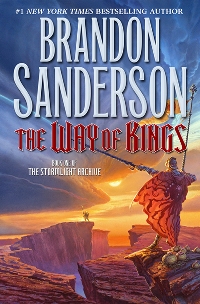
Sanderson’s Way of Kings – Please say something true.

These things truly irritate me, and it irritates me even more the way people SWALLOW IT ALL without blinking. Or are ready to be paladins of lies and defend those lies with all they have. The complete lack of truthfulness or even the lack of consideration that the public may DESERVE truthfulness (and how the bullshit relies completely on the fact that they know the public has a memory span of just a few seconds).

Why the fuck in this world there’s absolutely no one left who speaks straight and devoid of hidden agendas or personal interest?

But when you fling so carelessly bullshit up in the air, sometimes it comes back down.

So let’s look back, with straight quotes, at the reasons that Sanderson, Harriet and Tor used to justify the split in three books for “A Memory of Light”:

How did the decision to divide this final book into three parts come about? Was it a publishing necessity, a story necessity, or something else?

Harriet: The material that Jim left was very capacious, and Brandon saw after working with it for a while that he could not complete it in less than a total of 750,000 words. This is probably an impossible thing to bind – unless we sold it with a magnifying glass. 250,000 words is in fact a fat, or Rubensesque, novel. You will notice that 3 x 250,000 equals 750,000. So… part of the decision was based on making a book within the scope of binding technology. The major part of the decision was to get ALL the story that Jim left out there for us all.

somehow get to 750k by the March deadline that Tom had said was about the latest he could put a book into production and still have it out for the holidays.

Tom felt that we NEEDED to provide them a book in 2009.

However, in this scenario (400k book), you end up releasing two fractured books, and the bookstores are mad at you for their size. (Which may translate to the bookstores ordering fewer copies, and fans being mad because they can’t find copies as easily as they want)

When I’d mentioned 400k to him once, he’d been wary. He explained to me that he felt 400k was unprintably large in today’s publishing market. Things have changed since the 90’s, and booksellers are increasingly frustrated with the fantasy genre, which tends to take up a lot of shelf space with very few books. There is constant pressure from the big chain bookstores to keep things smaller and thinner.

(March 2009) Last night—Monday night—I pulled an all-nighter finishing up THE GATHERING STORM and sending it off to Harriet and company. In essence, the book is now complete. I suspect there will be another hasty round of revisions this weekend, but the book really needs to be in ASAP. We’re already over-deadline in getting it in, and Tor is going to have to pay overtime at the printer in order to get it out in November. (Tom has already said he’d do this, so it’s not a big issue, but every day counts. Hence the all-night revision marathon.)

So the reasons they used exactly a year ago to explain a split in three books were:

– A 400k book is too big to publish.
– The publishing market and retailers are pushing for smaller books. Big doesn’t sell anymore.
– If the book was coming out before the end of the year, then the final draft had to be completed by end of March.

Now fast forward to March 2010. Brandon Sanderson announces he has a huge 10 book epic series lined up. Published by Tor. The first book is 425k words long. It is coming out in August, but he hasn’t even completed the final draft yet (but no delays expected).

POINT ONE: This book is the start of a longer epic.
KINGS stands at 425,000 words right now. I’ll be trimming that down to (hopefully) 380–390k when I do the next draft. (Which will be the final draft.)

In case you don’t know, THE WAY OF KINGS is my next novel, set to come out August 17th of this year.

All the difficulties and market’s demands waved a year ago are completely gone. Maybe because those difficulties never existed and were completely made up in order to justify the three book split and hide the true motivation that was obviously less palatable than portraying heroic publishers working the printers overnight in order to deliver the book as soon as possible to the worthy reader.

This is the spin I hate. How they flaunt themselves as saviors and how everything is boasted as something exceptional just to serve their public, in the public’s own interest. When it’s just the MERCHANT speaking here, not the writer. And there isn’t even one truthful word when you have a merchant speaking.

In the end this irritates me but doesn’t matter. The problem here is how these guys expect everyone to swallow their bullshit and then forget about it. Why if something is done for a legitimate business reason it can’t be told plainly for what it is? Why the need to spin and mystify?

In August I plan to buy the book and read it ASAP and enjoy it. I have good expectations about it and I hope it will be so good that I’ll look forward for all the 10 books. I’ll read the book without any prejudice and really want it to be great. But I also hope he drops all the bullshit and speaks straight when he wants to promote his books. He can do good promotion even without flinging bullshit everywhere.

Lost (TV) – What it may be

I meant to write this after the Kate’s episode, and especially after reading this long but interesting commentary. So this works like an unplanned follow-up to my previous conclusion about Lost.

It’s here, but also in other similar stories, that two parallel tracks start to get revealed. One is strictly plot. What people do, how the story develops and ends. Another is thematic and about abstraction. As to squeeze “meaning” or “purpose” out of a story. Some kind of message that is supposed to reach you. The first track, about the plot, in this show is about the medium that carries the message.

In my previous post I explained my theory about Lost: it’s empty of meaning because it may represent the triumph of form over meaning (metalinguistic study). They show you the power of storytelling but it’s nothing more than that. Power without purpose or moral. The plot is convoluted around the medium and hides a secret core that in the end will be revealed for what it is. A fraud.

I explained the reasons for this theory in that previous post. What happens here instead is that Lost writers may have a far greater ambition. One that, if revealed as true, is staggering and awesome. Maybe Lost has a point, and it’s something quite powerful and that I admire. This new perspective & interpretation is revealed in that article I linked, and the problematic part is that the idea, if proven false since at this point it is as reliable as fanfiction, risks to be way cooler than what Lost actual writers have planned for the show.

That theory was written after the second episode of this last season. Now we are at episode eight. The theory still holds, maybe also because not much is happening even if time’s running off. But it’s still a theory that is consistent and coherent with everything else, little subtle aspects that make sense.

What’s this theory about? It is about the relationship between the two timelines. We all expect that they are going to connect plot-wise soon. That one will collide with the other in some way, but the relationship, see above my reference to the two parallel tracks, may be entirely thematic. Consider this: I’ve said this show is a display of competency in the use of medium, and that the show may be a study done only to refine it. One of the most obvious methods used in the show, as a medium, is the flashback, flashforwards, flash-sideways. These are methods of screenplay. How you tell a story. Pacing and so on. If you analyze how flashbacks are used in the show, you notice that they are very carefully placed to maximize tension and curiosity. Obviously they aren’t random, but till this season they worked simply as well placed insights into some character. What if this season changed the rules and the relationship between the two timelines lies right in the way they are connected? The thematic purpose linked to their use as a medium. The two timelines are related thematically in how and when they appear.

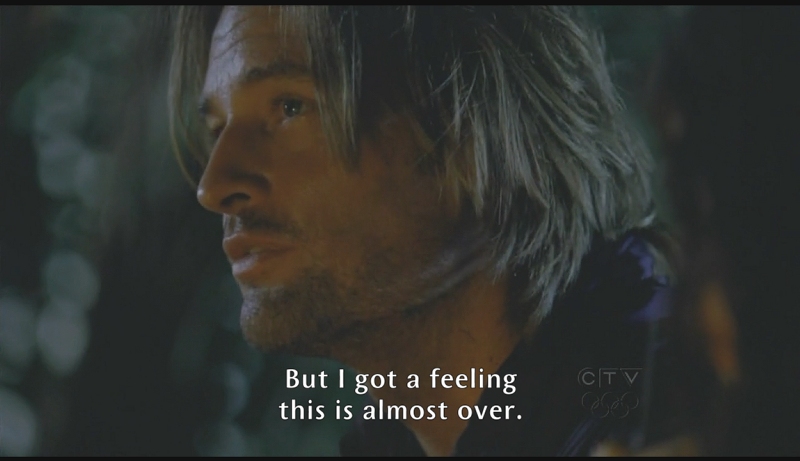
The Sideways world story line very clearly mirrored the Island world story line. Kate chases after Sawyer; Kate chases after Claire. Is there a physical, cosmic connection between the two realities?

is Lost doing this just to be all fancy-pants literary, or could it be that Lost is trying to tell us something? Could it be that the creative design of Lost’s sixth season, embedded and suffused with past episode resonance, is a clue to resolving the mystery of its seemingly split reality?

I am wondering — and perhaps you are, too — if these corresponding events across parallel realities are meaningful synchronicities. It’s almost as if no matter the world, these people are destined to intersect and to play out variations of the same essential drama.

That’s the suspicion. Here’s the theory:

Now here’s the crazy thought I had — an alternative to past-life/reincarnation theory. I submit that when Kate saw Jack at the airport, she established a psycho-spiritual circuit with her doppelganger self on he Island, and specifically the moment between Jack and Kate in Temple. This circuit facilitated a transference of psychic energy that flowed from Island Kate to Sideways Kate — or rather, from Redeemed Kate to one of her Fallen Kate selves in another world. That energy? Strength. Selflessness. A sense of sacrifice. A sense of ”You All Everybody” idealism. All qualities that Kate embodied in her Island story — and all qualities that Kate gained during her Sideways story.

In fact actors trigger these flashes with more active acting than usual. Flashes don’t just happen between a scene and another, placed carefully, but they are “acted” as afterthoughts. As if the character is influencing or being influenced by the transition. They are fluid. What happens in a timeline kind of flows into the other, and not by mere thematic association, but concretely with meaning.

What I say (or mostly who wrote that article) is that we use to think to these flashes structured by a third party narrator. We got someone who’s putting the story down for us in a way that is compelling. So scenes are placed following a “screenplay” that was made by this hidden narrator. But the story in the flashes is, like, real world. As if you go dig in a attic, find an old toy, and start remembering some past scene that involved that toy. In the real world your past DOES influence what you do in the present. So something that you remember can influence what you decide to do. Maybe it’s not a case, to underline something special is going on, that these flashes’s influence goes backwards. The 2004 timeline seems influenced by the 2007’s one. There’s something new that goes on there. The link is made plain and can’t be ignored or considered normal as previous flashes. These characters seem to communicate to their alternate version. Arguably, we could also consider the 2004 timeline like some kind of improvement. Implying an idea of “progress”. Let’s say human betterment.

So here’s the thematic meaning:

To put it more simply: Island Kate inspired Sideways Kate. Bottom line: The Sideways-Island relationship is a metaphor for our relationship to fiction. It’s about how fantasy redeems reality.

What’s the use of stories that aren’t even true? Lost answers, They teach us how to make the real world a better place.

And that’s how everything may come together. I theorize that Lost is all form and execution. A wicked study on how you can manipulate an audience. An cynical experiment not unlike Dharma’s own. But here, if this other theory is true, we get to see the other side of the moon: what is fiction ultimately about. A soul. Something that tries to reach out and actually tell us something that is TRUE. Especially in a show (see 8th episode) where everything is a trick and deceit. The possibility is that once all layers of this onion made of lies are peeled off, we get to something that is truthful.

Fiction, like every form of culture, makes us better and strive for progress. The only concrete aspects that makes us different from all other animals and living things of this world is that we have language (whose most peculiar function is, interestingly, metalinguistic, so about the medium itself), and so culture. In this war against nature, culture’s the only weapon men have. And its use, a choice (another theme of this show), is what makes the difference. It’s about us.

Let’s hope the smoke monster saves us (but this will be explained at another time).

Lost (in the middle)

There’s veeery subtle subtext here. Can you spot it? ;)

Straight from tonight’s Lost episode (also: the episode starts with a nice and well executed subversion):

Crack’d Pot Trail – Steven Erikson

In the last two years, since I first discovered his books, Erikson has quickly became not only my favorite fantasy writer, but one of my favorite writers among all genres and classifications. And I started to ask myself what is that makes me “click” perfectly with some writers and not so much with others. What have Steven Erikson, David Foster Wallace and Roberto Bolano in common (the three most disparate writers I recently read)? I also got myself an answer: truthfulness. They write on the page things that are true. And I imagine the spontaneously arising question: how can a fantasy story be “true”? It can very well, and “Crack’d Pot Trail” is a most fitting example.

Recently I read a review of the first three novellas (not including this one, that comes fourth) that considered them a bit disappointing because they lacked a “serious” depth or actually gave something more to the characters primarily involved ( the necromancer Bauchelain & Korbal Broach, plus their manservant Emancipor Reese, the real star). This reminds me that the most devious aspect of everything that comes from Erikson’s pen/quill/keyboard is about the approach. Thus my warning, right here: this story of Bauchelain & Korbal Broach takes place, in-truth (and out-spoilers, trust me, for the whole length of this commentary), at the periphery of these characters. It is a story about them, but not featuring them. On the other side you get Erikson. Erikson himself, the writer, who put himself in the story unlike, not like, but still somehow similarly, Stephen King did with The Dark Tower. He’s there in the page and sometimes even pointing his finger and laughing at you, the reader. But, again, I remind you of the devious approach: the laugh is not scorn, just affinity. Sympathy.

The novella has a plot, it has a direction and drive, it moves toward a resolution already from the start. Akin to other fantasy and non-fantasy plots, it is also a journey. But in this case the plot isn’t the idea that truly builds the novella, there’s a metaphorical one that more strongly takes the scene. So two parallel binaries of purpose and narrative intent, both requiring payoff before the end, while also getting entwined enough to not be simply juxtaposed. Succeeding in doing that is not easy task at all. The novella is written beautifully, as I already raved weeks ago, almost to the point of showing off, stylistically brilliant, but in the second half I started having some serious doubts that it could get a satisfying resolution. Doubt that increased exponentially when I had just 10 pages left to read and still unable to see things possibly coming together in a decent way (no matter my own doubts were repeatedly voiced in the story itself by both characters and narrator). Then Erikson is able to pull it, masterly, in like 3 pages. It comes all together in three pages.

While the plot moves in a direction (an hapless bunch of artists, hunters, and champions of rectitude, together in necessity, on the heels of our infamous necromancers), the real story is about the relationship between art and audience. The artist, the critics and the public, seen from all possible perspectives and often metaphorically, but in such a case that a metaphor is, right the story, always executed literally, very real and sound (which I don’t explain here to not ruin the greatest idea/association in the novella). The tortuous relationship is made focus and explored without filters. What, elsewhere, readers often mistake for boisterous arrogance (on the part of Erikson, toward readers) and are ready to jump upright and accuse, is instead a skewed perspective because Erikson never defends univocally one side, and what appears as spite and mockery (sometimes even truly, but healthy, as part of all relationships) is also always parody of all parts included. The audience as well the writer (self-parody as well self-doubt are featured, hopefully not smothered and forgotten after the ending, that does take a side but that shouldn’t be interpreted as the author’s own true belief that erases all doubts before, in a kind of very, you know, un-subtle way, on the part of the reader. But we’re spinning again here and you never know which side you end up facing).

Which falls perfectly in the trick that makes the book, as subjects and objects mingle together and you can’t discern anymore if you are reading a parody or if you are yourself the object of parody, the one who’s laughing or the one who’s being laughed at, or maybe just staring at yourself in a mirror, playing both roles, that also connects with other layers inside the novella, both as themes and plots. Which novella essentially is: a satire, a parody. Totally un-subtle, not even trying. As satires are meant to be: all-encompassing, clever, malicious, deceitful, outrageous, disrespectful, defiant, very politically un-correct. And, essentially: truly subversive at its core since it lacks even a verse. There’s no safe ground. Everything and everyone is subject of scorn as well as compassion. No filters nor prejudices, just a razor sharp sight that spares no one.

Well, no one besides Bauchelain & Korbal Broach, who, you already know, are just meant to win even when they lose.

The premise that founds the story: who’s more useless in the world than an “artist”? (especially a world where first priority is just surviving) And what if, to justify their existence, the artists were made to pay with their own life if their art was judged not entertaining enough?

And what if democracy (voting for: life or gallows) was made of stupids and illiterates who would only reward the worst of the artists?

As you can imagine I loved this novella as much I loved the previous three. It’s not a mad rush as The Lees of Laughter’s End, not as funny and as entertaining, but it has a similar drive of The Healthy Dead and quality-wise I judge it above. Sharper and more outrageous. Plot-wise it only shines toward the end and slacks a bit in the middle, but the payoff in the end redeems that aspect, as long you don’t expect the plot and just the plot to drag you along for 180 pages. As in all cases, you have to be interested in what the writer is writing about, and in THAT case there’s no slacking or word wasted even here.

“So I pose the following provision. Should she decide, at any time in your telling, that you are simply… shall we say, padding your narrative, why, one or both of the knights shall swing their swords.”

It also reminded me I love reading.

P.S.
In the 181 pages there’s also space for zombies (yes zombies, not T’lan Imass) and a good amount of graphic sex that will make you chuckle a lot (in a good way). Oh, and also a god addicted to jerking off.