This is The Malazan Book of the Fallen

After I wrapped up “The Curse of the Mistwraith” I went back to read “Midnight Tides”. Brew green tea, sit down. Read ten paragraphs or so, then… think for the following hour and half without reading another line.

That’s what it does to me. More and more characters give voice to my own thoughts and feelings. Blurring, because I can’t say anymore if I developed a line of thought on my own, or sparked by something I read. Often I find characters say something I thought a moment before, and often I go to reread some old page and find again some thought I believed my own.

Seren longed to hold on to that long view. She desperately sought out the calm wisdom it promised, the peace that belonged to an extended perspective. With sufficient distance, even a range of mountains could look flat, the valleys between each peak unseen. In the same manner, lives and deaths, mortality’s peaks and valleys, could be levelled. Thinking in this way, she felt less inclined to panic.

From Deadhouse Gates:

What see you in the horizon’s bruised smear
That cannot be blotted out
By your raised hand?

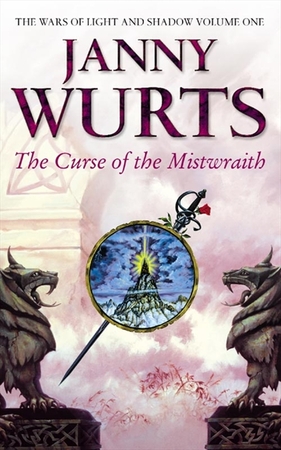
The Curse of the Mistwraith – Janny Wurts

This book, and series, is particular to begin with because it’s very rare to see discussed in the usual places. It could appear as some old series buried and forgotten, written by a writer that was well known at one point but didn’t quite make into the Big Names that continue to be relevant. Instead this is a series “in the making”, right now. Series’ name is “The Wars of Light and Shadow” and will be completed (it will) in 11 volumes. The 9th comes out in October of this year and usually one can look forward to a two-years gap between each volume. I tend to have quite a bit of trust in the writer as I’ve read in her forums and interviews that she never strayed from her original plan and is strongly against series that “sag or sprawl”, as well as cliffhangers at the end of the book. In fact this series is structured in five different arcs, with each giving closure to the story at hand (this is true for the first book, that makes a single arc on its own).

It wasn’t in my reading queue as I had never heard about the writer, but curiosity took over. I certainly like Grand Plans in literature, akin legendary human achievements, and the more I started to gather information the more curious I got. Especially because of what I read in a interview, about the approach to the writing and the series. The name already gives a good idea about the central conflict that builds it. A war of “light” and “shadow”, mirrored by two brothers, opposite in nature and natural magic proficiency. The 800 pages of this first book are quite focused, the two main characters are the two brothers and the PoV rarely drifts away from them. The setting is broad and sprawling (at the periphery, since only a small chunk of the landmass shown in the map is actually explored) but there are only a dozen or so characters that gravitate around the two brothers. So the story is rather railed on its way and doesn’t sprawl. After 200 pages or so the course is set and one has the idea of the type of story that is shaping up. More confusing at the beginning, there’s a short opening page written from a point “out of time” (relatively, meaning an epoch distant from the one where events take place) that already frames this primary conflict, filling it with foreboding.

The story then opens not in some isolated farm or village at the periphery of the map, but outside the map itself (with me wasting a lot of time to find the location in the almost illegible map in the minute paperback, location that obviously wasn’t there). Another world, in fact, linked by portal. Only after the first 100 pages the two brothers get exiled and actually enter the “world” where the rest of the story will take place. Here the two brothers are immediately “rescued” by the “Fellowship”, a group of seven wizards that waited for this arrival for a long time, and that have already woven them tightly into their own plans (the “free will” is an important theme here). Athera, the world they come to, is plagued by some sort of curse in the form of a mist that completely obscures the sky, keeping this world in a permanent gloom, without sun or starry skies. The premise appeared to me quite ridiculous and fancy, but this superficial level is not the deal, and there’s indeed an interesting world hidden below (the mist).

Lead by prophecies, the first task that the Fellowship appoints to the two brothers/mages/future kings is to join forces, and powers of “light” and “shadow”, against this unnatural mist, so that Athera will be able to see a clear sky again. But this also becomes the trigger for the main conflict and the origin of all woes. The Fellowship’s plans and reasons are given a full exposure. They aren’t treated like an hidden manipulative organization with shady purposes. You can see the conflict of their motivations, of cause and effect. Be there when they decide the next move. Through a sort of “mage sight” they can “scry” all possible future events, and then decide which course to take. But the Mistwraith, the mist that covers the world and that arrived through another of the world portals, is an element “outside” the picture that doesn’t follow their know rules, and so can easily avoid prediction and distort the outcomes.

That element, and quite pivotal being the seed that sparks the whole conflict, is the part I liked the least. The first part of the novel is a very good description of the conflicted relationship between the two brothers. It opens amidst war and Arithon (the “shadow” brother) is taken prisoner. From this point onward the two brothers face each other directly, and slowly come to understand each other. The conflict is eased, almost resolved. But this is only the early part of the book and one is already well aware that the rest of the series is founded on this particular conflict. That’s the problem. This precise and deep, solid characterization is taken over by an escamotage. Essentially the whole conflict is sparked again by magic possession. It’s not truly convincing and it disrupts the work on characterization that precedes it. There’s some justification of what happens that surely grounds it better, but never coming off as so convincing:

Where opening did not already exist, the creature could not have gained foothold.

…But it certainly gives the decisive shove. The fantastic element becomes strength and weakness. The weakness I already described (the conflict has its root in magic, and magical unbalance) but it is also a strength in the way Janny Wurts builds this setting. The fantastic element is always a delicate part in fantasy novels regardless of who writes them. For many readers who prefer to stay away from the genre, the “fantasy” is something that opens a wide gap and so feels not relevant. Something alien or too estranged from a reality that is actual and matters. So a way to mystify truths, an excess of decoration. A fancy dress for a trite, juvenile argument. But here also lies the difference between the greatest fantasy writers and the rest: they use the “fantasy” not to dress but to strip reality of its layers. To reveal instead of hide. To go at the root of things, to understand deeply and without hypocrisy. As Janny Wurts said:

Fantasy allows discussion of sensitive topics with the gloves off.

That’s also the aspect I tend to criticize in the work of much bigger names in Fantasy. Martin being an example, being somewhat wary or suspicious about the “fantasy” element, and so keeping it almost off the page, far at the periphery, because it would upset the natural balance of a novel. And then without really understanding it and without knowing how it can be used once the series moves in that direction (a brilliant review of ADWD deals with these aspects).

This romantic idea of a world covered in mist, the plausibility of it and acceptance of the reader, are then the purpose of fantasy. Not to embellish or narrate of worlds that do not exist. But to speak intimately about ourselves. The inner world. The fantastic element is not a decoration or a veil that hides, but the coming of the revelation, a veil that comes off to let one see. It deepens the perception. And that’s why fantasy has the responsibility to stay grounded and cling to something that has to be meaningful and necessary. Not consolatory wishful-thinking, but language that is powerful and ambitious in its purpose.

I put Janny Wurts in the wide area of Erikson or Bakker for these reasons. Writing the “pretentious”, ambitious fantasy. Writing in the genre as a strength instead of a liability. With a clear vision of what they are doing and why. Janny Wurts has a far more classical/romantic style that keeps her more apart, even if not shying away from the brutality of the fight that closes the book. She keeps all the sharp, “gritty” edges, not blunted by romantic undertones (that are still there aplenty). The book has the vague feel of the Wheel of Time, but written from an adult and “serious” perspective. It has the strong classical feel and embraces the fantasy element, but the setting is solid and realistic, perfectly nailed and one of the best described in the genre. So is the magic, I’ve never seen (or thought possible) to describe magic in a so vivid way. It’s tangible. Whereas magic is usually kept vague and abstract, only dabbed in description, Janny Wurts describes minutely the details and behaviors, managing to make sense of it and keep it consistent. Often compared to the complexity of music and its rules, that can then be analyzed through great effort and manipulated:

a loophole in the world’s knit that hinged on a theoretical blend of fine points

The Fellowship, the group of powerful wizards that take care of the world, is not kept distant from the reader. The book offers their PoV directly and so the description and interpretation of their use of magic. They even behave as you’d expect of people wielding that kind of power and awareness: by manipulating directly every event in a brutal, arrogant way, yet coming off as the “good” guys. Even if in the end their actions become self-serving, and their attempts to restore their own power triggers all sort of cascading disasters. Relatively “good”, as this is another series that pivots around the idea of “gray” characters only driven and justified by their motivations. In the same vein of “modern” fantasy that “doubles” and opposes the PoV, treating equally both sides caught in a war. In this book this is the real driving theme, as the conflict between “light” and “shadow” is driven by respective flaws. It’s a story about making hard choices, accepting compromises that imply costs impossible to tolerate, and yet taking responsibility for all of this.

Whose cause took priority? In this world of divisive cultures and shattered loyalties, no single foundation of rightness existed.

But beside all this, it’s really a weird book and not one that I can easily recommend. The prose is an aspect I left on the sideline but that is the most important when it comes to decide whether or not to read this book. It is so lush and thick that it’s almost impossible to extricate (feels like work). I can’t even imagine how it can appear to those who use to “skim read”. It requires a lot of attention to keep track of things and there’s the constant risk that the eye glazes over, so you always have to keep that control and not sink whole in the prose. Beautiful, beautiful prose, surely, lush descriptions and minute, chiseled characterization and psychology, but it requires an effort.

Amid that graveyard of ravaged splendour, of artistry spoiled by war in a cataclysmic expression of hatred, arose four single towers, each as different from the other as sculpture by separate masters. They speared upward through the mist, tall, straight, perfect. The incongruity of their wholeness against the surrounding wreckage was a dichotomy fit to maim the soul: for their lines were harmony distilled into form, and strength beyond reach of time’s attrition.

A prose that soars, but in a way that often risks to become a huge yawn. The reader is only human, and attention has always the tendency to slip off. Not all that much brisk dialogue that feels like a chilly breeze. You often have to wade through beautiful, but thick, paragraphs of intricate description (of both psychology and landscape, treated equally). And yes, the book is SLOW. There’s a point where I draw the line, though. I don’t feel that the book meanders or overindulges in description of stuff that is not relevant. This prose is not opaque or rhetoric or redundant. Under there there’s some impressive characterization and masterful control of storytelling. As I said: it’s not a fun, brisk pageturner and it demands and clear, focused mind, but the purple prose is not superficial decoration and has always the root into something meaningful. Which is why, despite the effort, I also kept the determination.

Oh, and the fanciest of sex scenes:

In the sunwarmed air of their sleeping nook, he allowed her quiet touch and hot flesh to absorb his bitter brew of sorrow.

Another potentially problematic aspect is that despite a neutral approach to the characters, it’s Arithon to lead the way. He’s the one who retains a certain awareness, and the one that is most sympathetic. But he’s also the one with a supernatural sensibility and comes off as the “emo” type. Maudlin, always contemplative, with a Christ-like spirit of sacrifice (that brings its own flaws). You share with him all his thoughts, psychology and development, and this also takes its toll if you don’t like to indulge in this kind of analysis. On the other side Janny Wurts writes this kind of character splendidly and never falls into a boring or redundant cliche. It brings back to the essence of the writer, that is: to care. The quality of being born many times, and so become different characters. Be in their place. To feel. So this book demands a similar care and patience.

This makes a kind of slow, contemplative writing that is not for everyone. What I’m saying is that this “mist” or noise is still well rooted into something meaningful that made the effort worthwhile in my case. I’m looking forward to see the story open up and expand, less constricted by a relatively formulaic first book that is only the spark that sets the fire. From the first pages of book two (that opens the second cycle) it seems that there’s a gap of at least five years, so the story will surely grow from its premises and I’m curious about where it will go since the writer has said that every step has a point in the Grand Scheme of Things, and everything will converge for the closure of the series.

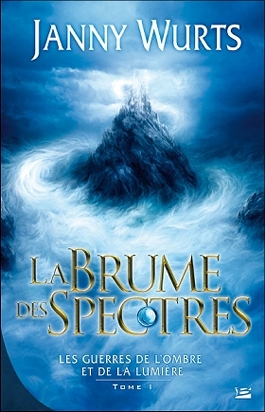
Bonus, the french covers. That are both beautiful and pertinent to the content of the books:
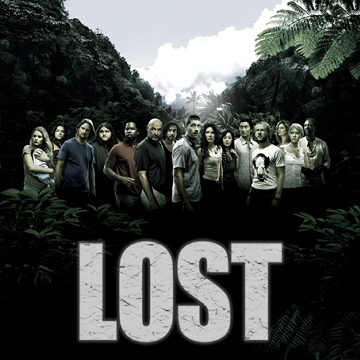
ASOIAF & LOST, similar shortcomings?

Just some superficial comments, as I’m far behind reading ASOIAF while still following how the opinions develop on the internet.

One reason why I appreciate ASOIAF without being a huge fan is because it’s to my eyes limited in some way. I recognize the mastery of the craft of writing and plotting, but it’s as if this craft is not in the service of something worth it. As if the pagecount is proportional to skill, but not to ambition. A great story, a great experience, but lacking a certain purpose or absolute necessity. It lacks a dimension.

All this contained in its structure. A song of ICE and FIRE. But five books in, the Winter is still coming. Fire and ice have yet to meet. What is at the periphery is still there, creeping in but still away. There’s lots of plot, but it’s like suspended in a stasis, with only the illusion of movement. And in two books all this is supposed to come in with a bang and then be resolved. It has yet to begin, but it’s already almost over. A very, very long prelude.

A step further, it seems to me that Martin doesn’t know what to do with the more “fantasy” elements of the story. They are atmospheric but not meaningful or done in an interesting way. Not dealt up to their potential. I’ve read the Prologue of ADWD because it received specific praises and was a self-contained story, but I didn’t find any particular inspiration in it. From the beginning, and with a precise intent, Martin has kept these fantastic elements subdued. They were only a spice, adding a certain flavor to the real meat of the story, which was about intrigue and family matters. But as the focus is supposed to shift, those “fantasy” elements don’t seem to be hiding a greater depth, and the story loses its steam.

Specifically about LOST what got my attention is trying to narrow down how mystery and mythology can be done well. From my point of view LOST finale was met with some disappointment because of a focus shift. It started in season 1 as an mystery/horror, then moved to mystery/sci-fi/pseudoscience and finally “dropped” its mythology to go fully mystic. The first transition worked, the second didn’t not go equally well.

The fact is that LOST in the beginning kept the people watching because it had a good rhythm and tension. It wasn’t the good ideas that kept the audience, but the execution. In fact I believe pretty much everyone started watching feeling quite skeptical. It then “earned” some faith as it started to give the illusion that everything that was shown wasn’t random but part of a cohesive vision that could eventually make sense. A vast, intricate mythology/puzzle that would give an unitarian vision to the disparate parts. While, with the last season, this huge mythology was essentially put on the sideline as if it became suddenly superfluous and uninteresting. In that way, it betrayed some expectations.

So what is that “worked” and that then didn’t live up to those expectations? From my point of view it’s about the core idea of the “hatch”. The “hatch” represented a pattern of mystery and mythology done 100% successfully. It felt compelling and satisfying. Opposed to the later developments that instead felt dry. The distinction between mystery done well and it being disappointing lies on whether or not it opens a window on a new scenario. The hatch is a good example because it became the pivotal axis of the first season. Everything revolved around that big mystery, and people came back for the second season to finally see what was beyond that hatch. A door opening onto something. An hole in the veil of mystery. The revelation did not disappoint. Why? Because it wasn’t a dead end, but it lead up to disclose a big new dimension of the mythology (The Dharma project and all it contained). The mystery felt compelling and satisfying because it branched out, it was a seed for something far greater. A box to open to discover a new world.

Back to ASOIAF, so I can make the link. What characterizes this series are the shocking, unexpected events, like a certain death in the first book, which remains like a signature. Yet that specific event “worked” not simply because it was unexpected and shocking. There were two main reasons why that specific event was so successful: (1) because a “way out” was already explicitly traced and readers believed it logical and true, a plausible development. The shock arrived because the death wasn’t the culmination of a scene filled with danger, but because it arrived once the danger felt already behind. (2) Because that death wrestled the plot in a whole new direction. It works because of mind-boggling consequences and repercussions it has on every level (characters and plot). It “opens up” instead of being just a dead-end and miserable death. It’s not a conclusion, but the true starting point. It becomes the spine of all that follows.

So there are these similarities between the successful (and unsuccessful) mysterious/mythological aspects of LOST and the successful (and unsuccessful) unexpected turns of plot that keep readers reading ASOIAF. The mystery/revelation chain works when it becomes a seed delivering a greater picture. Or comprehension that unifies disparate pieces of the puzzles. Same as in ASOIAF where it’s not an unexpected death to be compelling, but how the reader is directly engaged with its consequences, the opening and closing of possibilities.

If someone tried to replicate the success of ASOIAF following the widespread idea that “no one is safe”, then he’d only end up in failure. Because what works isn’t in that pattern of simply doing something unexpected, but in giving the new perspectives and knowing how to kick the story up to a higher level.

One wonders if Martin knows, with two books left, how to close the story in a meaningful way as he was able to do with its beginning, instead of being squeezed in that pinch made by fire and ice, that seems to have no real way out.

Musanilgi – The Journals of Musan

To escape his country’s harsh economic conditions, Jeon Seung-chul (played by the director) defects from Musan, North Korea to Seoul. He ends up living in the city’s rundown outskirts and makes ends meet putting up street ads. His only satisfaction is going to church, where he meets and becomes attracted to Sook-young, a choir singer who works in a karaoke bar by night. The Journals of Musan depicts the tremendous difficulties North Koreans have integrating in the capitalist society of South Korea, where they are often marginalized and subjected to discrimination.
I watched this movie today at a festival (same as this, a year ago). Another Korean movie and another masterpiece. It won “Best New Filmmaker” at the Tribeca Film Festival. A dramatic story of a North-Korean “defector” (Jeon Seung-chul) trying to stay afloat in Seoul. A shy guy, very respectful, head always bowed down, always staying on his own and barely saying a word. The filmmaking style is equally respectful (“deferential”, as written below). Never forcing scenes or exploiting them artificially. Very self-consciously. There are many scenes where the humor or the dramatic effect could have been boosted, but they aren’t and the story keeps its natural, unbiased, “muted” feel. No forced perspective.

There are a few key points. One is that there’s a religious theme at some point. There’s a religious song of which a couple of lines link back to the movie and can be used as interpretation. One is about how God saved the like of a “wreck” like “me”. As a prayer, being thankful that God had regard EVEN for a “wreck” like oneself. The other is that this salvation brought clarity. I was “blind” and now I see and understand.

Only that this story has no salvation. It’s not a cynic view on religion as these religious guys in the end are the only ones who (somewhat) accept Jeon (the protagonist). Yet the truth behind this story is that there’s no salvation at all. A fish out of the water sooner or slightly later dies. There are actually more than one ways to interpret the movie, as a tragedy or in more optimistic ways.

At some point I started to think in the perspective of the passion of Christ. And the Father/Son. The Father let it happen. He watched it. He watched his son being crucified and didn’t move a finger. See this then in the world’s perspective, the tragedies of every day. Stories, likes this one in the movie, based on a real story apparently, that have only innocent victims and no happy end. The Father, all-seeing. Not moving a finger.

The dog in the image is the puppy that the Jeon saves (from the world/environment) and tries to protect. Anti-god. He tries to do all he can and more even if already in the deep end of trouble. A puppy again like the reflection of someone living in a hostile world. A puppy that, left alone in that city, would likely die. In the puppy there’s the reflection of the protagonist, and it’s on the puppy that we see the protagonist’s “compassion” (hello Erikson, the themes are all renewed). A victim trying to save another. Jeon gets beaten a number of times by some thugs while trying to do his work, yet it’s only the third time, when he has the dog with him, that he fights back. To save the dog from them. He goes to search for him around when his “friend” first tries to sell the dog, and then abandons him after he figured out he couldn’t get anything from him. Saves again the dog’s life a number of times. Keeping him afloat as he was trying to do with himself. The movie ends with a “long take”. He gets again the job at the Karaoke, after he was being unjustly berated and fired, and after the woman pitied him when she learned he was being discriminated as North-Korean and was having a very tough life, the woman asks him to go out to a shop to get beer for customers and gives him as well something to eat for the dog. So we see this long take of him going out, feeding the dog for a while, then walking through the road to the shop, getting the beer making sure it’s of the right kind as asked, then walking back. A long, uninterrupted sequence. At some point it hits, but it’s entirely on the viewer. The camera follows the man from behind, not too close, looking at the whole road. He continues to walk down the road and it’s you, watching, to realize, whenever you manage to notice and without cuts in the scene, that there’s something in the middle of the road. Jeon continues to walk till he’s 2/3 feet away from his dead dog. Probably hit by a car while he was away. He stays there watching the dog, the scene running uninterrupted. The street is quite trafficked and cars start to move Tiananmen-like around the silent, unmoving Jeon and the dog on the ground. After a very long moment Jeon moves another step toward the dog, then continues on, walking past him. And the movie ends.

Maybe I’m a cynic but the way I see it is that Jeon tried to save the life of the dog. In the end he couldn’t do much, the dog died not because of all the previous threats he was saved from, but simply hit by a car. A city, an environment not hospitable. A fish out of its water. The kind of fate that likely happened to Jeon himself later. So god is watching, but the only ones who seem to care are “us”, victims.

The fallen.

P.S.
My spectation included a woman behind me that squealed aloud every time something bad happened to the puppy, but that watched impassively whenever all sort of bad things happened to the protagonist. Women…

“Critics” opinions from the internet:

Some of the best films can be found in the new, catch-all “Viewpoints” section, like writer/director/star Park Jungbum’s strong debut, The Journals of Musan, based on his real-life friend, Seung-chul, a North Korean defector in consumer-crazy Seoul. Park has no other agenda than to put the viewer in Seung-chul’s shoes. Like the film’s other bemused characters, the viewer will likely misjudge or at least change her/his opinion of the stolid man underneath a severe bowl cut. He earns just dollars taping (alas, not plastering) posters for a few dollars during the day, and at night he buses tables at a karaoke bar (for $4 an hour) managed by a pretty woman he first spies in church. (The film features one of the most beautifully directed scenes I’ve seen in a long time—a cringe-producing karaoke version of a Christian hymn.) Seemingly simple, deferential—stunned, really—Seung-chul’s slow to react, even when bullied. The only friend he has is a dog he finds on the street. (You’d be crazy not to be reminded of De Sica’s Umberto D). And it’s another film from South Korea that depicts Christianity without cynicism or condescension, in which faith plays an important motivator. (Park has worked as assistant director to Lee Chang-dong, whose Secret Sunshine is another probing, expansive film that deals with faith.) Finally, for dog lovers, it also features the cutest. Puppy. Ever.

As a North Korean defector now living in South Korea, Jeon Seung-chul, the based-on-true-life main character of writer/director/star Park Jung-bum’s debut feature, The Journals of Musan, endures all sorts of marginalization and abuse as he barely scrapes a living together putting up posters on walls. Truth be told, Park’s film itself sometimes feels like punishment, from its Dardennes-like aesthetic to its general humorlessness. Nevertheless, there are glimmers of a real, if amazingly bleak, worldview underlying its dour surface, as well as a tough-minded compassion that one might even go so far as to call humanism, that makes the end result feel less like the condescending wallow in ugliness that one might have expected.

The only levity from Jeon’s marginalization comes from the stray dog he eventually takes in and cares for—despite the protestations of his cheating, manipulative roommate. Yes, this character detail comes right out of Vittorio De Sica’s Umberto D. (another story about a down-on-his-luck outcast and his dog), but Park employs the detail in his own interesting ways. With most of the human beings around him giving him nothing but grief, the dog, of course, becomes Jeon’s only source of nonjudgmental love and companionship. (When his roommate angrily leaves the dog out on the street one day, Jeon naturally panics; tellingly, Park chooses this one moment to unleash the film’s only point-of-view shots.)

Posted in: Uncategorized | Tagged:

The Name of the Wind – my first impression

I had to pull the book from the shelf (since I’ve not yet read it) because I got curious. There was a comment on Malazan Tor.com re-read that basically claimed that Malazan was shallow compared to Rothfuss’ work. Despite its troll-ish nature (joining Malazan re-read to say it doesn’t deserve a re-read) I’m always curious by how works relate to each other and lately there has been quite a discussion about Rothfuss, with the 2nd book coming out. But from all I read there was a certain consensus that the book had pacing issues and was overlong. Which was exactly the opposite that this poster was claiming:

The degree of depth that’s being unearthed in the comments on the Name of the Wind reread thread have felt to me strongly supportive of the notion that the Malazan books are not very dense compared to Rothfuss, fwiw. I enjoy Erikson a lot as entertaining light reading with addictively much plot and world complexity and find the series worth having for that, but my lack of commenting is because I’m really not seeing that much thematic depth; the notions that war sucks and that compassion, integrity, endurance and bearing witness are virtues are neither points that strike me as particularly subtle or innovative nor ones that need so many thousand pages to be conveyed.

See, I’m pretty sure this guy has absolutely nothing worthwhile to say about Malazan, but maybe he has a point about Rothfuss. I’m not interested in a comparison, but I am interested in finding Rothfuss own qualities. The quality of prose is one I’ve seen claimed the most.

So I went reading the first 30 pages, following the Tor.com re-read in order to see the “degree of depth” that it was “unearthing”. Coming right from Erikson the difference in prose is the most noticeable aspect, and beside it, also the approach to the story. These two lines for example wouldn’t blend too well in a Malazan book:

Graham, Jake, and Shep nodded to themselves. The three friends had grown up together, listening to Cob’s stories and ignoring his advice.

Probably two of the most common lines you can find. There’s nothing weird, or stylish, or significant about them, but they set the story on a level of normality. It’s contained in a slice of life scene that has nothing special about it and actually draws its point from this notion. And again a corner of the world, life made simple, plot details introduced little by little, bits by bits. Hints here and there about hidden elements. Easing carefully the reader in, the story well measured on that reader.

So yes, I see a certain mastery of storytelling. Every sentence drives its point and wants the reader put under that spell that will keep him turning the pages. Feeling the story, the characters, getting involved. It’s a very delicate and caring way of writing, showing passion for the writing itself. It has a traditional air of fairy tales and gives a feeling of safety. The story may include danger, but you know it’s done for the purpose of the story itself. The monsters aren’t real.

Erikson obviously runs opposite to all this. I said many times as there seem to be no slice of life scenes in the Malazan books. No character leading a normal life, caught up in normal business. That kind of relief and reduction of complexity of the world is absent and all the characters are tossed this way and that, snapping between plots. We’ll never know how the Malazan series would look if written from a more relaxed and natural point of view. It’s the opposite of what Erikson does, but sometimes I wonder how it would be.

That’s how I’d frame Rothfuss work at the moment. I recognize a good style of writing honed for a precise effect. I’d say that it sits safely within a tradition, embracing and nourishing it more than challenging it, but this isn’t a “flaw”. I’m far more skeptical instead about “depth unearthed”. It seems to me more of the kind that Larry calls as the “speculative mills”. Meaning that it’s all about piecing together mysteries and doing guesswork about what really happened and finding out all the little hints and mentions of this and that.

But it’s a kind of activity I find dry. I focus on what the writer wants and says, I always stay within the text and do not allow imagination to fill untold stories and alternate possibilities. I know many, many readers thrive on that, projecting themselves in the story and making it their own. I don’t see anything wrong with that, but the “depth” I’m looking for has to be in the text, not in spurious speculation or wishful thinking.

I’m sure I’ll enjoy some “entertaining light reading with addictively much plot and world complexity”, but that’s likely to define more Rothfuss’ work than Erikson’s.

Posted in: Uncategorized | Tagged:

Interior and exterior worlds – microcosm/macrocosm

From Midnight Tides. Thematically linked to “The Tree of Life” and symbolic spaces (see second paragraph, it can’t be more explicit than that):

Drawn to the shoreline, as if among the host of unwritten truths in a mortal soul could be found a recognition of what it meant to stand on land’s edge, staring out into the depthless unknown that was the sea. The yielding sand and stones beneath one’s feet whispered uncertainty, rasped promises of dissolution and erosion of all that was once solid.

In the world could be assembled all the manifest symbols to reflect the human spirit, and in the subsequent dialogue was found all meaning, every hue and every flavour, rising in legion before the eyes. Leaving to the witness the decision of choosing recognition or choosing denial.

Udinaas sat on a half-buried tree trunk with the sweeping surf clawing at his moccasins. He was not blind and there was no hope for denial. He saw the sea for what it was, the dissolved memories of the past witnessed in the present and fertile fuel for the future, the very face of time. He saw the tides in their immutable susurration, the vast swish like blood from the cold heart moon, a beat of time measured and therefore measurable. Tides one could not hope to hold back.

[…]

He sat huddled in his exhaustion, gaze focused on the distant breakers of the reef, the rolling white ribbon that came again and again in heartbeat rhythm, and from all sides rushed in waves of meaning. In the grey, heavy sky. In the clarion cries of the gulls. In the misty rain carried by the moaning wind. The uncertain sands trickling away beneath his soaked moccasins. Endings and beginnings, the edge of the knowable world.

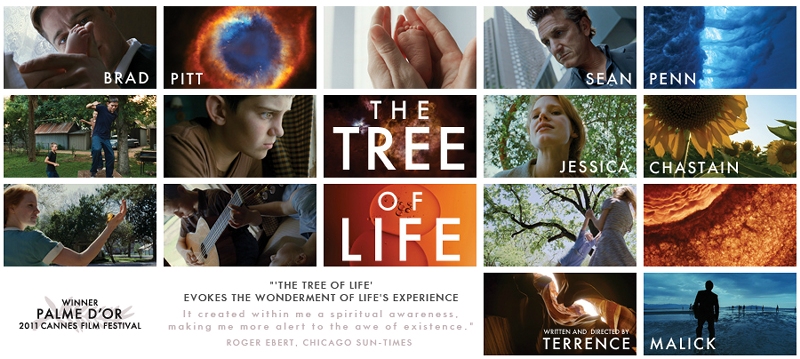
The Tree of Life – Terrence Malick

I watched this movie today (I guess I make a special case, going from writing about Ultraman to this). I was expecting something dense and complexly layered, instead I saw a surprisingly simple movie. Beside the (legitimate and laudable) pretentiousness of these “artistic” movies there’s nothing that it’s cryptic or hard to figure out here. What it wants to say is clear and straightforward, easily interpreted by everyone, as long one doesn’t fall asleep and lets the movie lead and set the flow. It’s a movie that rewards a humble, trusting approach.

Long movie, two hours and half, without a linear narrative or even a traditional use of language. That’s why it can still be a challenge to watch. The scenes are disconnected, like a collection of pictures, a life’s album, linked together by their symbolic theme. But this association proceeds linearly, so easy to grasp. Everything that doesn’t belong to its meaning is taken out of the picture, so one isn’t misdirected toward details and detours. It tells the story of a family, seen always in retrospection. It gave me a similar feel of the last episode of LOST, in particular that final serenity and tranquility while looking back at the dramatic scenes that precede and alternate with those inside the church. Also in this movie every small slice of life scene alternates with pictures and music of “the birth and death of the universe”, from cells to galaxies. Think of the flippant, hallucinated finale of 2001: A Space Odissey, and stretch it along a whole movie. A story of a family that alternates with sequences with dinosaurs made in CG. It makes it work, and makes very simple to understand why these sequences are present and what they want to represent. A movie filled with clarity in spite of this attempt to “embrace” everything. The meaning of life within the entire universe.

It is oddly empty of passions. There are some of these slices of life that show the drama of life, but this drama is seen from a quiet and calm point of view. It tries to underline this duality represented by “the father’s way” and “the mother’s way” (as you can see in official site), but I think the movie itself, maybe Malick himself, is rooted in the Mother’s way. It’s a movie where grace and elegance are the dominating tones.

It’s also a movie unified by compassion. It has been defined as a “prayer” more than a movie, and it is a fitting description. The pieces that narrate the story of the family are not linear. They are memories re-discovered. Often images without dialogue and just a symbolic value. Every object is filled with meaning, like poetry. Words spoken alternate with words whispered, becoming thoughts. Contemporary (to the scene) or contemplative (from a future self, looking back) joined in dialogue. There are three points of view alternating: the mother, the father, and one of the sons (why it’s only one should be obvious). All three looking back at their life, trying to understand, grasping for meaning and sense. Trying to fix those moment, understand what they are/were. Why. How they happened. Three points of view and three voices that look back at their whole life.

It’s filled with compassion because this look back is completely empty of guilt or blame. Guilt and blame are both part of the story as it is natural, but not in the form of judgement. Neither of the three are judged by the other two. But they are also not avoided, they are observed and understood. Forgiven and embraced.

I could say that this is an “epic” movie in every sense. And from what I wrote you could see that it’s very close to what I think Erikson’s series also tried to do. These are kindred works, that fully embrace and fulfill what art can and should be.

They try to find meaning in life both in the most specific and universal way. Eye-openers. Without bias and prejudices. In being what they are they also become prayers. And prayers that have absolutely nothing to do with cults or religious aspects. They are prayers that aren’t intended for a selected group, and that do not leave out anyone.

P.S.
Reading some comments on the forums. See for example this one and make the connection to LOST finale:

I can’t put it into words. Not sure I get the beach scene near the end, except it felt like everyone had died and were meeting eachother in the afterlife, some after a long time, some after a short;

Some other comments collected:

What an extraordinary movie. Such a touching, gorgeous look at, heck, everything. I don’t have much to say right now, maybe later, but ‘The Tree of Life’ shook me to my foundation.

It is an absolute masterpiece, though anyone expecting a “conventional” movie in three acts will be quite shocked, of course. Anyone familiar with Malick should know what to expect.

It felt like going to hear a symphony performed; if you can let it wash over you and its performed well enough, all the meaning and beauty you’re looking for will come welling up from inside, not from someone standing on the stage informing us what the composer wants us to feel.

Even if you get nothing out of the film this way (and no doubt thats the case for some), this is absolutely one of the greatest works in cinematography that I’ve ever seen, and the acting is astonishingly good.

Just came out from seeing Tree of Life, and it was an amazing experience and just flat out breathtaking.

the camera work felt like seeing the world through the eyes of a child. The way the camera moved and interacted with the environment it had such a wondrous gaze, always looking up, curiously watching people and it shows how we learn about life like a child, with a vague understanding of life around us.

This movie is a large portion science/philosophical fiction but it intentionally avoids science, and completely revels in pure subjective visual knowledge.

These aren’t commercial “blurbs”, there are just spontaneous comments from those who watched the movie.

And something from Ebert:

In my mind there has always been this conceptual time travel, in which the universe has been in existence for untold aeons, and then a speck appeared that was Earth, and on that speck evolved life, and among those specks of life were you and me. In the span of the universe, we inhabit an unimaginably small space and time, and yet we think we are so important. It is restful sometimes to pull back and change the scale, to be grateful that we have minds that can begin to understand who we are, and where are in the vastness.

Posted in: Uncategorized | Tagged:

The idea behind the system (Malazan)

I posted this on a forum. It structures my idea for the “system” to explain the Malazan series as a whole, which has lead me to write it to Erikson. Who confirmed me I nailed it (and then asked me to not reveal it completely).


I was writing some comments on Tor re-read, so I thought about asking for opinions here. KEEP IT SPOILER FREE, as I’m not looking for plot details, but just for overall/thematic structure.

The line of thought is this: what is that drives the purpose and meaning of the series?

One of the central themes of the series is that history is continuous and doesn’t have a beginning and end. But then to tell a story you have to divide it into discrete pieces, and the way you make this division is the way you decide to interpret it and give it meaning.

So why ten books? As each book tells a relatively self contained story, the whole series, as a collection of ten books, must have a central idea or theme that defines it. A beginning and an end. What is this central idea that drives the whole series and makes it something “finished”? What is the concept, idea, theme or character that unifies it?

The first answer a reader could have is: the Crippled God. The CG is what set the plot into movement, and its fate determines the conclusion of the series.

Is the “Malazan Book of the Fallen” the story of the Crippled God? My idea comes from these questions. I think that the central conflict in the series is another, and that the Crippled God is only one of the pieces involved in a bigger game. An important one, but not the central one. And if I wanted to choose another that is more “representative” then I would pick Paran.

Ultraman

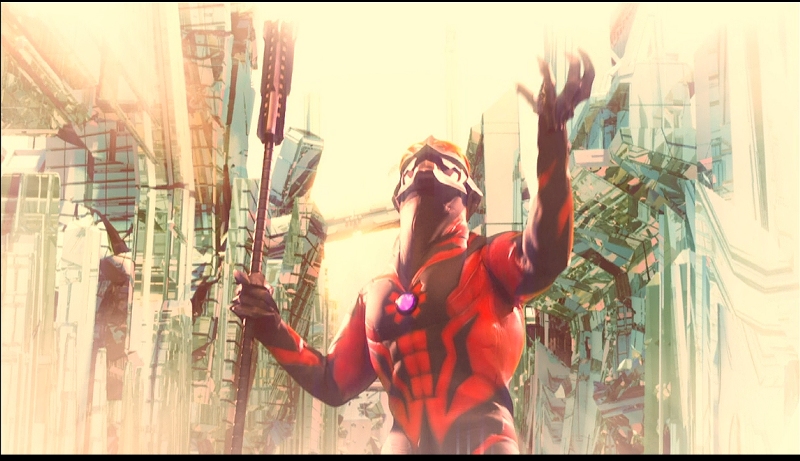
I could say this is a beautiful illustration of Venom or Carnage painted by Alex Ross. But it’s not. It’s just a screencap from one of the recent Ultraman movies. Hugely popular in Japan. What you see there is an actor in a suit.

A movie that is utterly ridiculous. They start fighting from the first minute and continue till the last, barely speaking a line of dialogue between one scene and the next. One hour and half in total. Of (extremely redundant) fighting.

It’s almost an anti-movie. The kind of stuff that is at the same time brilliant and atrocious. The whole movie takes place on CG backgrounds, so it’s all done in bluescreen. It’s not completely CG, the actors are real, only wearing costumes and 95% of the time expressionless masks. I mean, when you have a CG movie, like those made by Pixar, all the effort goes to build communicative expressions. Here instead the masks negate all form of expression from the only element that in not CG, so you have at best the posturing trying to communicate something. Suits hiding real actors on top of fake backgrounds. There’s also something of Fritz Lang’s Metropolis as the staff that the bad guy wields makes weird piano notes when he fights.

The plot itself is a cliched hodgepodge of eastern and western plot patterns. The Ultramen are very similar to the Green Lanterns, surveying and policing the galaxy, defending the many planets from oversize dinosaur-like monsters. Their home planet risked to die after the sun exploded (like Superman), then compensated by the construction of an artificial sun that also turned all the population into masked super-heroes. A power that then lures those who are the most ambitious and want it all for themselves. The rest seems like a copy of Star Wars without plot, characters or setting (and budget). Just fights and “impressions”. And in between there’s also a father-son thing going on, with the son being exiled on another planet with a Yoda-like instructor in order to learn how to resist the lure of power and its responsibilities.

But as I said it has its charm and it should be seen, at least as a weird experiment. I had to research a bit, as the story connects here and there with other material. This is the most concise list of stuff available subtitled and directly connected material, leaving out the main series:

Ultraman Mebius Side Story: Ghost Reverse (Part I&II) – Two half an hour special episodes that vaguely set-up the first movie
Mega Monster Battle: Ultra Galaxy Legends – 96 minutes movie, the screenshot is taken from this
Ultra Galaxy Side Story: Ultraman Zero Vs Darclops Zero (Part I&II) – Two half an hour special episodes setting up the sequel
Ultraman Zero: The Revenge of Belial – 100 minutes sequel to Ultra Galaxy movie. This one is the one they say it’s good and that prompted me to watch from the start, hoping to find some trace of “plot”

Posted in: Uncategorized | Tagged: